The 'Healthy' Asian Menu Order That's Secretly the Worst Thing on It
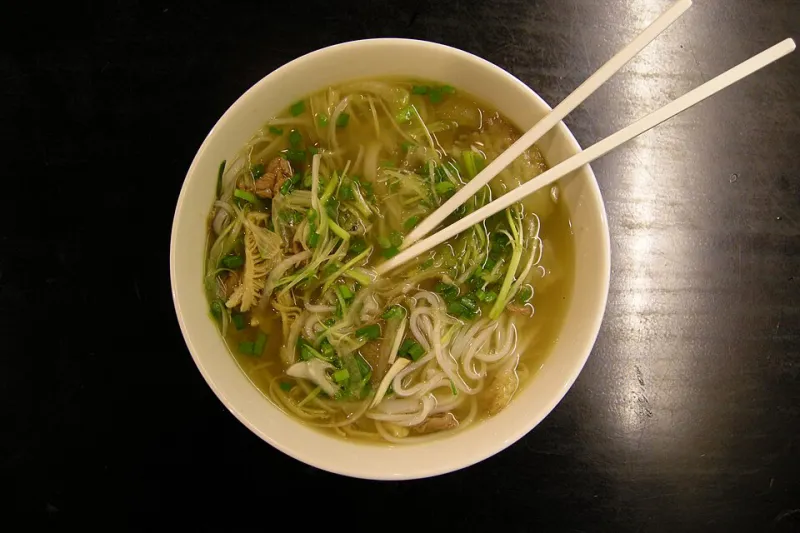
Photo: Vyacheslav Argenberg, CC BY 4.0, via Wikimedia Commons
Restaurants love slapping the word "healthy" next to Asian dishes — usually meaning a sauce-free grilled protein and a pile of steamed broccoli that no one in Tokyo, Hanoi, or Bangkok would recognize. Meanwhile, the dish your Vietnamese grandmother actually made — the one with the 12-hour bone broth and the mountain of fresh herbs — gets no such label.
Here's our slightly opinionated take: the Americanized "healthy" version is often worse for you than the traditional one. The problem is that most diners can't decode a menu well enough to see it. Let's fix that.
Case One: Poke Without the Point
Poke began in Hawaii as simple cubes of fresh ahi, sea salt, seaweed, and kukui nut — lean protein, iodine, healthy fats. Then mainland fast-casual chains got hold of it. Today's build-your-own poke bowl can easily hit 1,000+ calories before you notice, thanks to:
- Sauce creep: Spicy mayo, eel sauce, and sriracha aioli add 100–200 calories and serious sugar per drizzle. Eel sauce alone is roughly half sugar by weight.
- Rice inflation: A "regular" scoop of white rice is often closer to two cups.
- Crunchy toppings: Tempura flakes and fried onions add refined carbs and oils.
The smarter order: A classic shoyu poke — soy, sesame, minimal sauce — over half rice, half greens, with real seaweed salad and cucumber. That's the original, and it's genuinely nutritious.
Case Two: Pho Is Not the Enemy (The Sodium Is Manageable)
Pho sometimes gets flagged for sodium, and yes, restaurant broth can run high. But let's be honest about what else is in the bowl: collagen-rich simmered bones, star anise and cinnamon, fresh Thai basil, bean sprouts, scallions, and cilantro. Compare that to the "healthy" grilled chicken salad on the same menu, which often hides more calories in its dressing than a bowl of pho carries in total.
The smarter order: Ask for broth on the lighter side if sodium is a concern, load the herbs and sprouts, go easy on hoisin and sriracha (each squeeze adds sugar and sodium), and consider brown rice noodles if offered. Don't skip the dish itself — it's one of the most balanced things on any menu.
Case Three: Pad Thai, the Sugar Bomb in Disguise
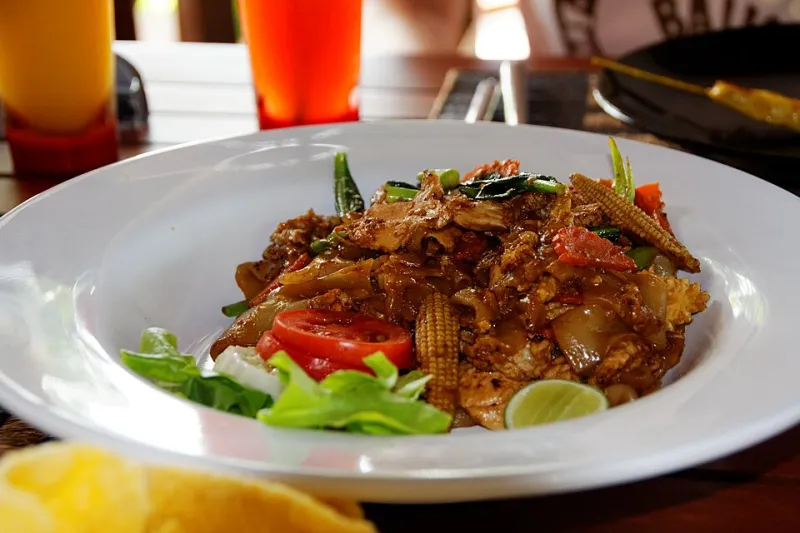
Here's the twist: the dish Americans think of as indulgent often is — but not for the reasons they think. Restaurant pad thai in the US frequently contains more sugar than a donut, because the sauce is built on ketchup, palm sugar, and tamarind concentrate sweetened further. A typical takeout order can exceed 1,000 calories and 40+ grams of sugar.
Traditional pad thai, by contrast, balances tamarind's tartness with just enough palm sugar, wrapped around eggs, tofu, and chives — a complete meal, not a syrup delivery vehicle.
The smarter order: Ask for the sauce on the lighter side, request extra egg and tofu, and squeeze lime generously. Acid reads as flavor, letting you skip the sugar.
Case Four: The "Light" Teriyaki Trap
"Grilled teriyaki chicken" sounds virtuous. But commercial teriyaki sauce is frequently a blend of soy, sugar, and sometimes pineapple juice concentrate — a glaze that can pack 10+ grams of sugar per serving, applied generously to offset lean chicken breast's blandness. Meanwhile, the traditional Japanese approach — a small piece of quality protein, glazed lightly, served with miso soup, rice, and pickled vegetables — delivers more satisfaction in fewer calories.
The smarter order: Order the glaze "on the side" or "light sauce," and add pickles or miso soup to round out the meal. Fermented sides bring flavor that sugar was compensating for.
The Pattern, Decoded
Across all four cases, the same three culprits show up:
- Hidden sugars in sauces — teriyaki, eel sauce, pad thai sauce, spicy mayo.
- Portion distortion — rice, noodles, and proteins sized for a Costco run, not a meal.
- Stripped-out tradition — the pickles, herbs, broths, and ferments that made the original dishes nutritionally complete get dropped because they're "weird."
That last one is the real loss. Traditional Asian cuisines evolved sophisticated systems — fermented vegetables for gut health, broths for minerals, herbs for flavor without calories — that modern American versions toss in favor of sauce and volume.
So next time you're scanning a menu, stop looking for the word "healthy." Look for the words "house broth," "pickled," "fresh herbs," "fermented," and "traditional." Your grandmother — whichever one — would approve.