MSG Didn't Deserve the Villain Edit — A Cook's Guide to Using It Well
MSG has one of the strangest reputations in American food. It is a white powder with a long history in Asian kitchens, a short history in American health panic, and a current status somewhere between misunderstood ingredient and dietary villain. The irony is that the fear never matched the science. It matched a stereotype.
The letter that started a panic
In 1968, a letter to the New England Journal of Medicine described numbness, weakness, and palpitations after eating Chinese food. The author called it 'Chinese Restaurant Syndrome.' It was a letter, not a controlled trial, not a population study, not a careful review. But it landed in a culture already primed to treat Chinese restaurants as foreign and suspect.
The phrase did a lot of work. It made a vague set of symptoms sound like a cuisine-specific problem. It gave people a name to repeat at dinner tables and in headlines. And it helped cement the idea that MSG was a cheap additive used to cover up bad cooking, rather than a naturally occurring form of glutamate that shows up in tomatoes, mushrooms, Parmesan, and seaweed.
That is the part that often gets lost. Glutamate is one of the most common amino acids in food. MSG is simply its sodium salt, used to add savory depth. The ingredient is not a mysterious industrial invention. It is a concentrated way to get the flavor that makes broth taste rounder and vegetables taste more like themselves.
What the research actually shows
Since the 1968 letter, researchers have looked hard at MSG. The FDA lists it as generally recognized as safe. Major health agencies have repeatedly reviewed it, and controlled studies have not consistently reproduced the symptoms people report. Some people may be sensitive to large amounts, and some report headaches or flushing after heavy meals. Those experiences deserve respect. But the evidence does not support the idea that MSG is broadly dangerous or that it caused a unique syndrome tied to Chinese food.
The bigger issue is that 'Chinese Restaurant Syndrome' was never a scientific diagnosis. It was a label. And labels can outlive evidence by decades.
The sodium math
MSG is not salt. By weight, it contains roughly one-third the sodium of table salt. That matters because many home cooks are trying to cut back on salt without making food taste flat. A little MSG can add savory depth while you use less table salt, soy sauce, or bouillon.
But it is still sodium. The goal is not to pour it on. The smart move is to use MSG as part of a lower-salt strategy, not as a free pass to oversalt everything.
How to use MSG strategically at home
Start small. A quarter teaspoon in a skillet of vegetables or a quart of broth is often enough to notice a difference. You are not trying to make food taste like MSG. You are trying to make it taste more complete.
Bloom it. Stir MSG into hot broth or a little warm water before adding it to a dish. It dissolves easily and distributes more evenly than sprinkling it over cold food.
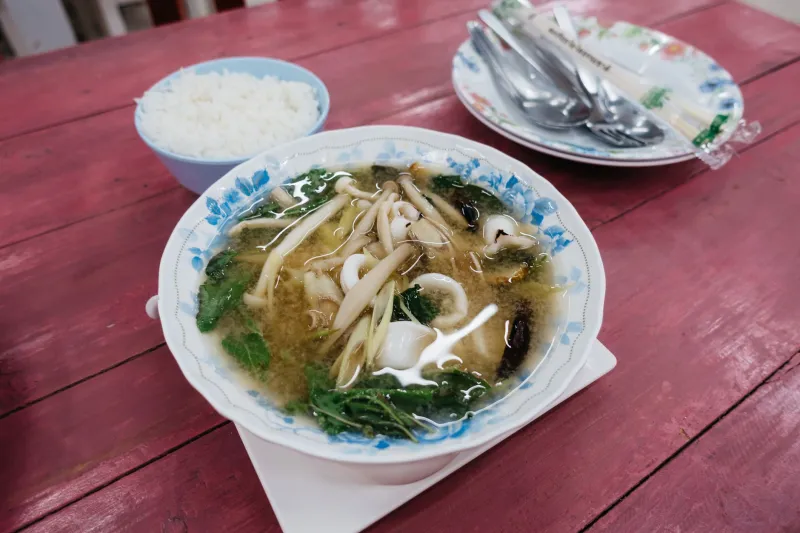
Use it on vegetables. This is where MSG earns its keep. Steamed greens, roasted mushrooms, stir-fried cabbage, and brothy soups can taste thin when you cut back on salt. A pinch of MSG can fill that gap without making the dish taste salty.
Pair it with acid. A squeeze of lime, a splash of rice vinegar, or a spoonful of kimchi will keep the flavor bright. MSG adds depth; acid adds lift. Together, they do more than either one alone.
Skip seasoned blends. Buy plain MSG, not a seasoned salt with MSG mixed in. You want control over the sodium and the flavor.
Taste as you go. MSG is not a magic trick. It can make a bland dish taste fuller, but it cannot rescue a dish that is greasy, overcooked, or unbalanced.
The bottom line
The MSG scare was never really about science. It was about culture, language, and a single letter that became a convenient story. If you feel off after eating MSG, skip it. No one needs it. But for most people, a pinch of MSG is a practical way to make Asian vegetables and broths taste richer with less salt. That is not a health hazard. That is a useful kitchen tool.