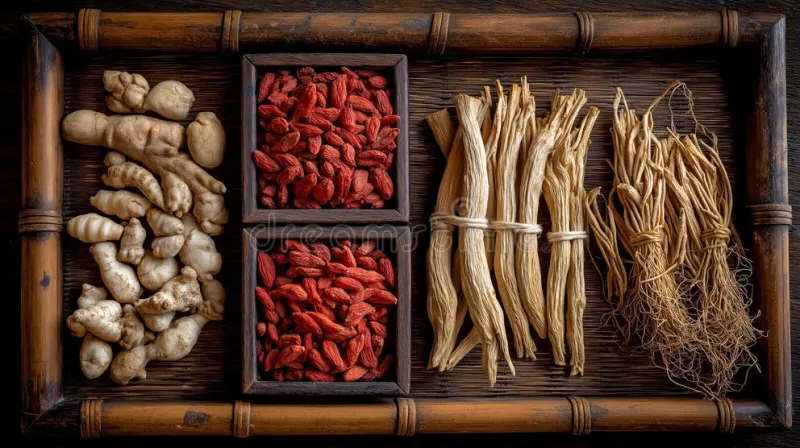
What's Actually in That Asian Grocery Aisle? The Science Behind Ginseng, Goji, and Other Stress-Busting Staples

Photo: Tessa Bury, CC BY 4.0, via Wikimedia Commons
There's a good chance you've walked past it a dozen times. That slightly mysterious section of the Asian grocery store—shelves lined with vacuum-sealed bags of dried red berries, papery mushroom slices, gnarly-looking roots, and little jars of dark powder. Maybe you assumed it was all for people who already knew what they were doing.
Here's the thing: those shelves are quietly stocked with some of the most scientifically studied functional ingredients on the planet. And while the wellness industry is busy charging $60 for adaptogen lattes and "immune support" capsules, your local H Mart or 99 Ranch Market has been carrying the real stuff for years—at a fraction of the price.
Let's break down what's actually going on with these ingredients, what the science says, and how to work them into your everyday life without a degree in traditional Chinese medicine.
First, What Even Is an Adaptogen?
The term "adaptogen" gets thrown around a lot in wellness circles, but it has a reasonably clear scientific definition. An adaptogenic substance is one that helps the body resist physical, chemical, or biological stressors—essentially helping your system stay more balanced when life gets chaotic. Think of it less like a stimulant and more like a stabilizer.
The concept has deep roots in traditional Asian medicine, particularly in Ayurvedic and Traditional Chinese Medicine (TCM) practices that have been refining these ideas for over 2,000 years. What's newer is the growing body of peer-reviewed research that's starting to validate what practitioners have known for generations.
Ginseng: The Root That Actually Lives Up to the Hype
If there's one ingredient that deserves its reputation, it's ginseng. Asian ginseng (Panax ginseng) and American ginseng (Panax quinquefolius) are both well-studied, and the active compounds—called ginsenosides—have been linked to some genuinely impressive outcomes.
A 2020 review published in the Journal of Ginseng Research found consistent evidence that Panax ginseng improves cognitive function, reduces fatigue, and supports immune response. Another body of research points to its potential role in regulating blood sugar, which is particularly relevant given rising rates of type 2 diabetes in the US.
What you'll typically find at Asian grocery stores: whole dried roots (great for long-simmered soups), sliced dried ginseng for teas, and sometimes fresh root in the refrigerated section. Korean red ginseng—which is steamed and dried—tends to be more potent and is worth the modest price bump if you're using it therapeutically.
How to use it: Drop a few slices into a slow-cooker chicken soup, or steep in hot water for 10–15 minutes with a little honey. Traditional Korean samgyetang (ginseng chicken soup) is one of the most delicious delivery systems imaginable.
Goji Berries: More Than a Smoothie Bowl Garnish
Goji berries (Lycium barbarum) have been a staple of Chinese wellness cooking for centuries—long before they became a trendy topping at overpriced brunch spots. The difference is that at an Asian grocery store, you can get a large bag for a few dollars rather than a tiny pouch for $12 at a boutique health food store.
The science here is solid. Goji berries are rich in zeaxanthin, a carotenoid that research consistently links to eye health and protection against age-related macular degeneration. They're also loaded with polysaccharides—complex carbohydrates that appear to have meaningful immunomodulatory effects. A 2008 randomized controlled trial found that daily goji supplementation improved energy levels, sleep quality, and feelings of wellbeing in healthy adults.
They're also a surprisingly good source of plant-based protein and contain all eight essential amino acids, which is unusual for a fruit.
How to use them: Simmer a small handful in congee (Chinese rice porridge), toss into a grain bowl, or just steep in hot water with chrysanthemum flowers for a classic Chinese herbal tea that tastes genuinely good.
Reishi Mushroom: The "Mushroom of Immortality" Gets a Modern Checkup
Reishi (Ganoderma lucidum) has been called the "mushroom of immortality" in Chinese tradition, and while that's obviously a stretch, the research does support some meaningful health benefits. The key compounds are beta-glucans and triterpenes, which have demonstrated immune-modulating, anti-inflammatory, and potentially anti-tumor properties in laboratory and clinical studies.
A 2016 Cochrane-adjacent review noted that reishi shows promise in supporting immune function in cancer patients, and multiple studies have found it helpful in reducing fatigue and improving quality of life. It's also been studied for its effects on blood pressure and cholesterol.
One thing to know: reishi is bitter and woody, so it's almost always used in extract or powder form rather than cooked and eaten whole. Asian grocery stores often carry dried slices (for brewing) and powdered versions that are easy to add to coffee, broth, or smoothies.
How to use it: Add a teaspoon of reishi powder to your morning coffee or hot chocolate. You won't taste much beyond a slight earthiness, but you'll get a meaningful dose of those beta-glucans.
Cordyceps: The Endurance Secret That Athletes Are Catching On To
Cordyceps is the ingredient that tends to raise eyebrows when people learn what it is (a parasitic fungus that grows on caterpillars in the wild—though the cultivated version used in supplements is Cordyceps militaris, grown on grain). Strange origin story aside, the research on cordyceps and physical performance is genuinely compelling.
Studies have found that cordyceps increases the production of adenosine triphosphate (ATP)—essentially the energy currency of your cells—which translates to improved oxygen utilization during exercise. A 2016 study published in the Journal of Dietary Supplements found that older adults who supplemented with cordyceps showed significantly improved VO2 max over 12 weeks compared to a placebo group.
For anyone dealing with chronic fatigue or just trying to maintain stamina as they age, this is worth paying attention to.
How to use it: Cordyceps powder blends well into broths and soups, or can be stirred into a pre-workout smoothie. Some Asian grocery stores carry it in dried form; powder is more practical for everyday use.
How to Shop Smart in This Aisle
A few practical tips before you dive in:
- Look for whole or minimally processed forms. Dried ginseng slices, whole goji berries, and dried reishi are generally more reliable than heavily processed blends.
- Check the country of origin. Korean and Chinese sources tend to have strong traditions of quality for these specific ingredients.
- Start simple. Pick one ingredient, use it consistently for a few weeks, and pay attention to how you feel before adding others.
- Talk to your doctor if you're on medications. Ginseng in particular can interact with blood thinners and diabetes medications, so it's worth a quick conversation.
The Bottom Line
You don't need a wellness influencer or a $90 subscription box to access some of the most well-researched functional ingredients available. The Asian grocery store aisle that most Americans walk right past is stocked with centuries of nutritional wisdom that science is actively validating.
Ginseng for energy and cognition. Goji berries for immunity and eye health. Reishi for stress and inflammation. Cordyceps for stamina. These aren't exotic novelties—they're pantry staples that have been keeping people healthy across Asia for generations, and they're more accessible (and affordable) than the wellness industry wants you to realize.
Nourishing your body doesn't always require something new. Sometimes it just means looking at what's already there.