Ancient Asian Pantry Staples That Science Says Are Quietly Winning the War on Inflammation
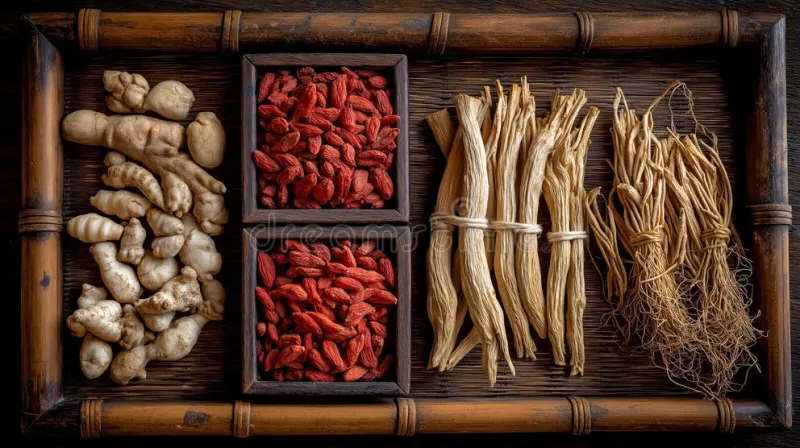
Photo: Asian pantry ingredients goji berries reishi mushrooms star anise on wooden table, via thumbs.dreamstime.com
Walk into almost any Asian grocery store in the US — whether it's a sprawling H Mart in New Jersey or a small family-run shop in Houston's Chinatown — and you'll find shelves lined with ingredients that most American home cooks walk right past. Dried goji berries. Whole star anise. Reishi mushrooms. Maybe a bag of dried longan or a jar of black sesame paste.
For decades, these items were considered niche, even exotic, by mainstream Western wellness culture. But something has shifted. Researchers at universities from UCLA to Johns Hopkins are publishing studies on the very compounds hiding inside these humble pantry staples — and what they're finding is rewriting how we understand inflammation, immunity, and long-term health.
America has a serious inflammation problem. Chronic low-grade inflammation is now linked to everything from heart disease and type 2 diabetes to depression and Alzheimer's. The supplement industry has responded by selling billions of dollars worth of capsules and powders. But here's the thing: Asian culinary traditions have been delivering these same anti-inflammatory compounds through food for thousands of years. No pill required.
Goji Berries: More Than a Smoothie Bowl Topping
You've probably seen goji berries at Trader Joe's, sprinkled over acai bowls or tossed into trail mix. But in traditional Chinese medicine and everyday Chinese cooking, these bright red berries have been used medicinally since at least the Tang Dynasty — roughly 1,300 years ago.
Modern science is backing that history up. Goji berries are dense with zeaxanthin and beta-carotene, two carotenoids with well-documented antioxidant activity. More relevant to inflammation, they contain polysaccharides — complex carbohydrates that research suggests can modulate immune responses and suppress pro-inflammatory cytokines, the molecular signals that drive chronic inflammation.
A 2021 review published in Oxidative Medicine and Cellular Longevity found that goji berry polysaccharides showed meaningful anti-inflammatory effects in multiple cell and animal studies. Human trials are still catching up, but the biochemical case is solid.
The traditional way to eat them? Simmered into congee, steeped in tea, or tossed into soups. That gentle heat actually helps break down the cell walls, potentially making those polysaccharides more bioavailable. Your morning oatmeal with a handful of dried goji berries isn't just trendy — it's genuinely smart.
Reishi Mushrooms: The Fungus That's Been Fighting Inflammation Since Before Western Medicine Existed
In Japan it's called mannentake — the "10,000-year mushroom." In Chinese tradition, reishi (Ganoderma lucidum) has been considered a longevity tonic for so long that it appears in artwork from the Han Dynasty. For most of that history, it was reserved for emperors and the elite because it was rare and expensive to source.
Today, reishi supplements fill entire sections of American health food stores. But there's a meaningful difference between swallowing a capsule and incorporating reishi into actual food — and traditional Asian kitchens figured that out long ago.
Reishi contains a class of compounds called triterpenes, specifically ganoderic acids, that have demonstrated anti-inflammatory effects in laboratory studies by inhibiting the NF-κB pathway — essentially a master switch for inflammatory responses in the body. It also contains beta-glucans, a type of soluble fiber that supports gut microbiome diversity, which is increasingly understood to be central to systemic inflammation control.
In practice, reishi is earthy and slightly bitter, which is why it's more commonly brewed into teas or added to long-simmered broths rather than eaten whole. A simple reishi broth — dried slices simmered with ginger, scallions, and a splash of soy sauce — makes a deeply savory base for soups or grains. Think of it less as a supplement and more as a flavor investment with serious health upside.
Star Anise: The Spice Cabinet Sleeper
Star anise is the backbone of Vietnamese pho, a key player in Chinese five-spice powder, and the source of a compound called anethole that's been quietly fascinating researchers for years.
Anethole, the primary active compound in star anise, has shown anti-inflammatory properties in multiple studies by blocking the activation of NF-κB and TNF-alpha — two of the most studied inflammatory pathways in human disease. A 2012 study in the Journal of Medicinal Food found that anethole significantly reduced inflammation markers in animal models. More recently, researchers have explored its potential role in gut health, where it may help reduce intestinal inflammation.
Beyond the science, star anise is simply one of the most versatile and underused spices in the American kitchen. Drop two or three whole stars into a pot of beef stew or chicken broth and let them simmer low and slow. The flavor is warm and slightly sweet — not overwhelming, just complex. You're not cooking "Asian food" at that point; you're just cooking better food.
Why Food Beats the Supplement Aisle (Again)
Here's what tends to get lost in the supplement conversation: bioavailability and synergy. When you eat goji berries in a warm broth alongside other vegetables and healthy fats, the carotenoids are absorbed more efficiently than they would be from a cold-pressed capsule taken on an empty stomach. When you simmer star anise alongside ginger — another proven anti-inflammatory — the compounds interact in ways that isolated extracts simply can't replicate.
This is what food scientists call the "food matrix effect." The whole is genuinely greater than the sum of its parts. Traditional Asian culinary systems, built over millennia of observation and refinement, intuitively understood this even without the vocabulary of biochemistry.
There's also the psychological and social dimension. Eating a bowl of pho loaded with star anise, ginger, and scallions on a cold evening is a different experience than choking down a pill. Food connects you to culture, to family, to ritual. That matters for stress — itself a major driver of chronic inflammation.
Getting These Into Your Actual Weeknight Routine
The good news is that none of this requires a dramatic kitchen overhaul. Here are a few low-effort entry points:
- Reishi broth base: Buy dried reishi slices online or at an Asian grocery. Simmer with water, ginger, and a few garlic cloves for 45 minutes. Strain and use as a soup base or freeze in ice cube trays for quick weeknight use.
- Goji berry oatmeal or rice porridge: Stir a small handful into your morning oats or a simple congee. They plump up beautifully with heat and add a mild sweetness.
- Star anise in your braise: The next time you make a slow-cooked meat dish or even a lentil soup, add two or three whole stars. Remove before serving. That's it.
- Five-spice seasoning: Buy a quality Chinese five-spice blend (which includes star anise) and use it as a dry rub for roasted chicken thighs or root vegetables.
None of these moves require a trip to a specialty wellness store or a $40 supplement. They require a visit to the Asian grocery aisle — or a ten-minute online order — and a willingness to cook with a little more intention.
America's inflammation crisis isn't going to be solved by any single food. But the idea that the answer might already be sitting on the shelves of your local Asian market, waiting to be rediscovered? That's worth paying attention to.